
Your Biggest Problem Isn't Money, Anxiety, Alcohol, or Communication

Think your biggest problem is money, anxiety, alcohol, or communication? The real issue may be how you evaluate your experience—and it’s keeping you stuck.
Most people are wrong about their biggest problem.
Not because they’re careless.
Not because they’re lazy.
And certainly not because they’re unintelligent.
In fact, most high-functioning adults stay stuck precisely because they are intelligent.
They explain their problem convincingly.
They say things like:
“I don’t have enough money to make a change right now.”
“I can’t do that because my anxiety would spike.”
“I’m too busy with two jobs, kids, and managing everything.”
“Alcohol isn’t the problem. It’s the stress.”
“We just need to learn to communicate better.”
These explanations sound reasonable. Mature. Responsible.
But they quietly narrow their options before they ever begin the work.
And that is the real problem.

We See the World Not As It Is — But As We Are
There’s an old idea in psychology:
We don’t see reality directly. We see our interpretation of it.
In Acceptance and Commitment Therapy (ACT), we call this fusion — becoming so attached to a particular explanation that we stop questioning it.
If you believe:
“I don’t have enough money,”
You stop exploring alternatives.
If you believe:
“My anxiety won’t let me,”
You stop testing your capacity.
If you believe:
“We just need better communication skills,”
You may avoid addressing betrayal, fear, resentment, or alcohol misuse.
If you believe:
“Alcohol isn’t the problem — work is,”
You protect the coping strategy that’s quietly costing you everything.
The way you evaluate your experience determines the size of your behavioral menu.
And most people unknowingly choose from a very small menu.
Why Intelligent People Stay Stuck
High-functioning adults don’t struggle because they lack insight.
They struggle because they over-rely on the wrong strategy.
When you are intelligent, disciplined, and successful, you’ve likely solved many life problems analytically. You treat problems like math equations:
Identify the variable.
Adjust the input.
Optimize the output.
That approach works beautifully for business, finances, and logistics.
It fails miserably with the suffering of life.
Anxiety is not a math problem.
Attachment wounds are not a math problem.
Addiction is not a math problem.
Marriage repair is not a math problem.
They are more like sunsets.
You don’t solve a sunset.
You experience it.
You respond to it.
You allow it.
When we try to eliminate discomfort instead of learning how to relate to it differently, we engage in what psychology calls experiential avoidance.
And avoidance fuels the very patterns we say we want to change.
The Pattern You Keep Repeating
There’s a short poem called My Life in Five Short Chapters by Portial Nelson.
Chapter One
I walk down the street.
There is a deep hole in the sidewalk.
I fall in.
I am lost… I am helpless.
It isn’t my fault.
It takes forever to find a way out.
Chapter Two
I walk down the same street.
There is a deep hole in the sidewalk.
I pretend I don’t see it.
I fall in again.
I can’t believe I am in the same place.
But it isn’t my fault.
It still takes a long time to get out.
Chapter Three
I walk down the same street.
There is a deep hole in the sidewalk.
I see it there.
I still fall in… it’s a habit.
My eyes are open.
I know where I am.
It is my fault.
I get out immediately.
Chapter Four
I walk down the same street.
There is a deep hole in the sidewalk.
I walk around it.
Chapter Five
I walk down another street.
This is how change actually happens.
Change actually happens when we experience a shift in how we see and understand the way things are.
Not when the hole disappears.
Not when someone finally communicates perfectly.
Not when stress reduces.
Not when anxiety vanishes.
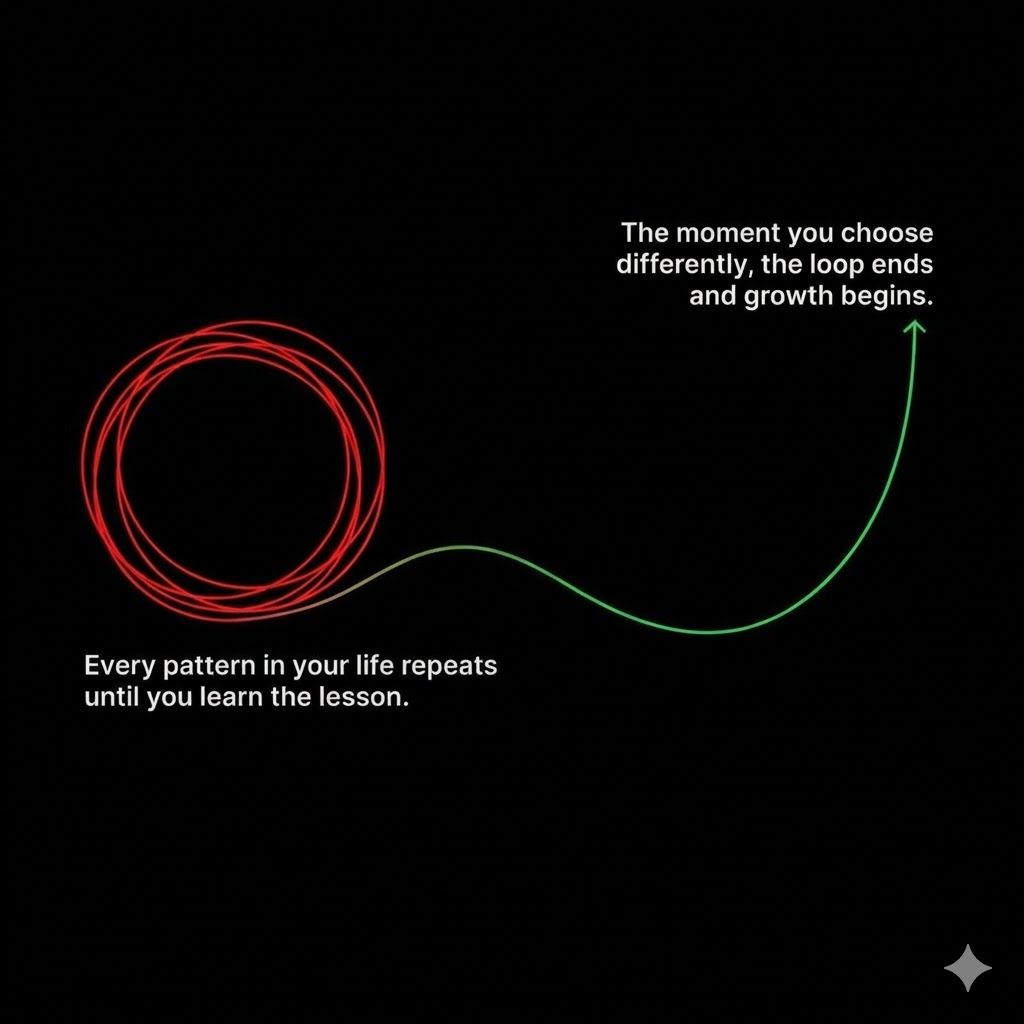
The loop ends the moment you see things differently.
In marriage counseling, this often means recognizing:
“It’s not just communication. I am afraid of being rejected.”
In addiction recovery counseling, it often sounds like:
“Alcohol isn’t helping me manage stress. It’s managing me.”
In anxiety therapy:
“My anxiety isn’t stopping me. My relationship to anxiety is.”
In high-achieving professionals:
“Being busy is not the problem. Avoiding stillness is.”
Perspective widens our world allowing space for change.
Psychological flexibility expands our options.
Why Therapy Sometimes Doesn’t Work
Many people seek couples therapy, addiction treatment, or anxiety counseling and leave saying:
“It didn’t help.”
Sometimes that’s true.
But often what happened is subtler.
They tried to use therapy to confirm their existing explanation.
To fix communication.
To reduce anxiety.
To get their spouse to change.
To control drinking without examining its function.
But if your evaluation stays rigid, no technique will create lasting change.
Research in both psychology and organizational change management shows something consistent:
Change fails when identity and evaluation remain untouched.
You will repeat the same pattern until you shift how you interpret your experience.
And when you shift perspective — even slightly — new behavior becomes possible.
The Moment Growth Begins
Growth does not begin when suffering disappears.
Growth begins when flexibility appears.
When you can say:
“Maybe my first explanation isn’t the whole truth.”
When you can tolerate discomfort long enough to choose differently.
When you stop trying to eliminate the sunset and start learning how to stand in it.
That is the turning point.
Therapy for High-Functioning Adults and Couples in Knoxville, Tennessee
At Emerging Strength Life Coaching & Counseling, we work with:
- Couples seeking marriage counseling after repeated communication breakdowns
- Professionals balancing anxiety, high responsibility, and burnout
- Individuals in addiction recovery who want more than symptom management
- Marriages impacted by alcohol use or relapse
- High-achieving adults who feel stuck despite insight
If you are in Knoxville, East Tennessee, or anywhere in Tennessee, and you’ve tried therapy or treatment before but still feel caught in the same pattern, it may not be that you failed.
It may be that you were solving the wrong problem.
Our work integrates:
- Acceptance and Commitment Therapy (ACT)
- Motivational Interviewing
- Evidence-based addiction recovery counseling
- Strategic couples therapy
Not to eliminate suffering.
But to expand your flexibility — so you can finally choose a different street.
A Different Kind of Next Step
If you are ready to stop repeating the same loop in your marriage, your drinking, or your anxiety…
Schedule a consultation.
Let’s examine not just what’s happening in your life — but how you’re evaluating it.
Because the moment you choose differently, the pattern begins to change.
And growth begins.
Schedule Your Free 30 Minute Consultation
During this video call we can discuss your challenges, questions, and how to help you find your strength and live a life you love.