Drinking and Anxiety · Knoxville, TN

The Drink Works, and That’s Why It’s Hard to See.
You're not drinking to get drunk. You're drinking to get level. A couple in the evening and the day finally stops running. It works, it has worked for years, and nobody around you thinks anything is wrong. And everybody knows something isn't exactly right either. That's what makes this one hard to make sense out of.
If This is Where You Are
You Don't Think You Have a Drinking Problem. You Think You Have an Anxiety Problem.
You would never search for the other thing. You're not in trouble. You haven't lost a job or a license or a marriage. You go to work, you do it well, you come home and pour something, and the noise goes down. If anybody asked, you would say you drink about like everyone you know.
What brought you here is the other end of it. The sense that you're managing more and enjoying less, and that the managing is taking something out of you that it didn't take five years ago.
It might look like some of this:
Waking up with a growl, anticipating the friction
Two on a Tuesday, which is unremarkable, except that it's every Tuesday
Your partner has stopped asking you for anything after eight
Being told you're checked out, and knowing they're not wrong
The evening doesn't really start until the first one is poured
Rest that doesn't restore, and a mind that starts working before you've asked it to
A world that's been slowly shrinking, and you can't point to when it started
None of that is a diagnosis. It’s a pattern. It’s a common one, more common than anybody says out loud, and it’s not a character problem.
You’re not drinking because you’re weak. You’re drinking because it works.
What’s Actually Happening
Alcohol is a Tool. What Work Is It Doing for You?
And what does that work cost? The substance is a tool. That's all it ever was. What matters is what it's doing, at what price, and whether that's a trade you'd make on purpose if you were looking straight at it. Most people sitting across from me are somewhere in the middle, holding a tool that used to add and has started to subtract.
Here's what makes it hard to see clearly. It still works. Every time. Twenty minutes in, the thing you carried home is smaller. That's real. You're not imagining the relief, and anybody who tells you the drink doesn't work isn't paying attention.
What it doesn't do is hold. The relief is on loan. It comes due in the morning, and the next evening starts a little heavier than the one before. So you do it again, for good reason, and the loop tightens without anyone deciding anything.
Nobody plans this. There was never a night you decided to become a person with a drinking problem. There was a night that was hard, something helped, and it kept helping.
One size does not fit all
You don't need a diagnosis to look at this, and you don't have to accept a label to change something. What you do need is a way to find out what actually fits you, and nobody finds that out by deciding in advance. You try it on, you look in the mirror, and you pay attention to how it actually sits. That's not a compromise position. That's the only way anybody has ever learned what works for them.
What It Costs
Acceptable Is Not the Same Thing as Satisfying.
Relief does something specific. It makes the evening workable. It takes what was too much and brings it down to something you can be in. That's not nothing, and it's not failure. It's avoidance doing its job, and it does it well, which is exactly why it keeps getting the job.
But workable is a low ceiling to spend a life under. You already know you can make an evening tolerable. You can do it reliably, on demand, in twenty minutes. The question worth asking is whether tolerable is what you want to be aiming at, when what's actually available is a life you'd move toward on purpose.
The coping treadmill runs hard and covers no ground. After enough years on it, what you notice isn't that things got worse. It's that things got smaller. The evenings are accounted for. The mornings are for recovering from the evenings. What goes first is everything that actually restores a person, the play, the learning, the things you used to do that had nothing to do with getting through. Nothing dramatic was lost. What went is optionality, quietly, over a long time.
The part nobody says out loud
Most people in this spot are not in denial. They know. They've known for a while. What they don't have is a version of the conversation that doesn't start with a label they don't recognize themselves in, or end in a room and a set of steps they never asked for. So it stays unsaid, and staying unsaid is most of what keeps it running.
We only hurt where it matters. If this bothers you, something you care about is on the other side of it.
How We Work
I’m the Substance Abuse Counselor Who Doesn’t Talk About the Substance.
That sounds like a line. It isn't. The drinking is the part you can already see, and looking harder at it doesn't tell you much. Counting gives you a number. A dry stretch tells you that you can do a dry stretch. Neither one answers the question you actually have.
What we look at instead is what the drink is doing for you. Not in general. At which specific moments, in which circumstances, under what conditions, standing in for what. That's real work, it's particular to you, and it has nothing to do with units or liver enzymes.
Here's the thing the tool was never doing. It was never actually holding anything up. It never touched the real problem, which is that the world is difficult and most of us were never taught how to carry that well. No tool solves that. What solves it is harder and slower and worth considerably more: finding your strength, and building a life you love enough to want to be present for.
What people are actually tired of
Most people who come in haven't settled what they think. They're ambivalent. They go back and forth, and the back and forth is honest, because it genuinely is complicated. They can't quite say what the problem is, even to themselves, even after years of turning it over.
That's reasonable. It's also exhausting. The loops. Going over it again. Rehearsing a conversation you may never have. Arguing both sides and landing nowhere, again. That's its own kind of tired, and in my experience it's what people are actually tired of by the time they call. Not the drinking. The thinking about the drinking.
If Someone At Home Is Already Worried
Somebody in Your Home May Have Seen This Before You Did.
Often the person who says it out loud first isn't the one drinking. If that's the shape of it here, that's workable, and it doesn't mean you're in trouble. Shame and secrecy are what keep this running. A relationship that can hold the truth is what shrinks it.
And if you're the one who noticed, and you're reading this trying to work out how to say it, there's more on that in rebuilding trust after addiction and in what it's like living with a spouse who relapses.
The Formal Part
Twenty-Five Years. This Is the Work I Actually Do.
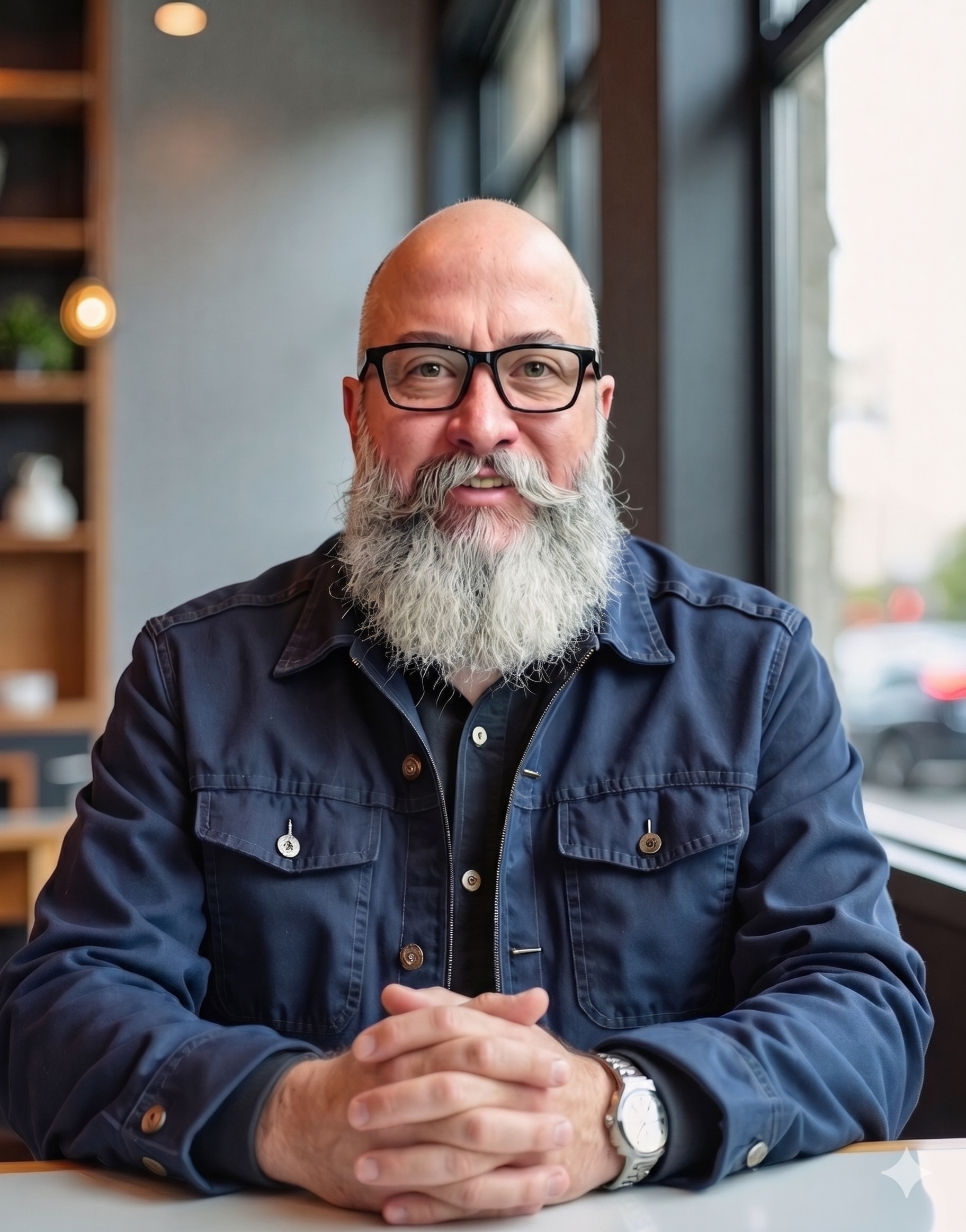
PhD in Counseling. M.Ed. in Marriage and Family Therapy. Licensed Alcohol and Drug Abuse Counselor, LADAC II, State of Tennessee. Twenty-five years across mental health, addiction treatment, residential care, and private practice in Knoxville.
I treat people whose drinking or drug use is costing them something, including what it's costing their relationships, their marriage, their family, and more. That's this. I don't treat diagnoses. I help people change patterns of thinking, feeling, and acting, so they experience life differently and make the changes they actually value. If what you need is treatment for a mental health condition, I'll tell you early and help you find the person who does that.
Where To Next
Let’s Talk.
It’s complicated. Bring it complicated.
The consultation is free and takes about 30 minutes. No paperwork, no commitment, no intake process disguised as a conversation. It's a choice point, and a small one. Keep doing what you've been doing, or spend half an hour finding out what else is on the table.
Knoxville · Farragut · Oak Ridge · Clinton, TN · Telehealth Available Across Tennessee